Your Apps Don't Talk to Each Other. Your Team Pays for It.
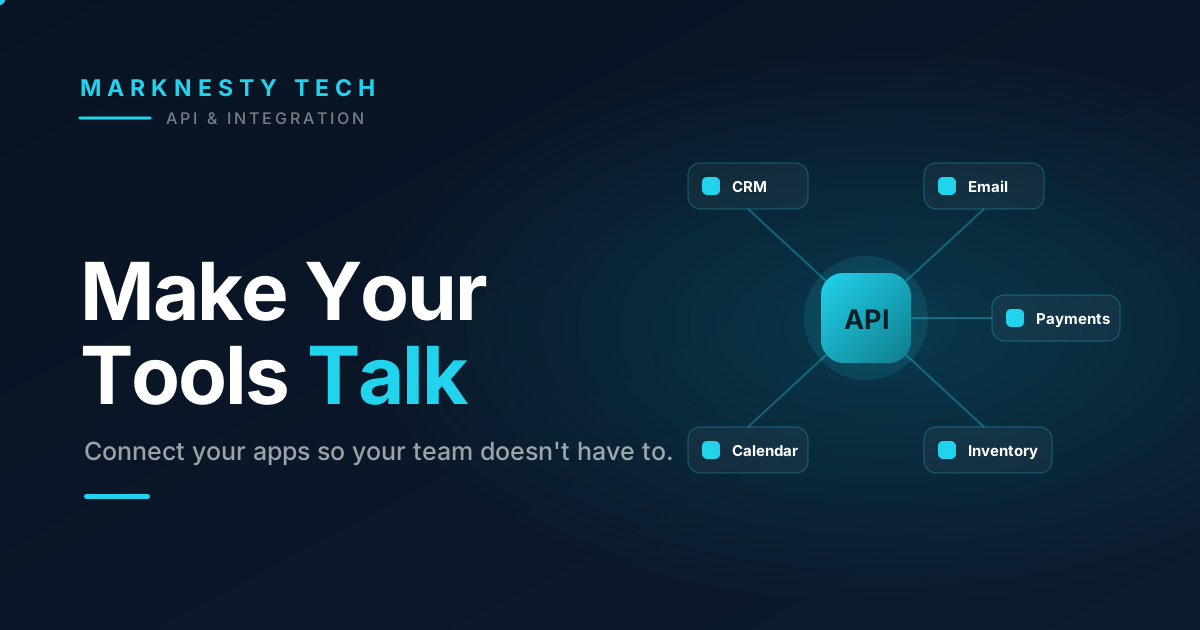
Most businesses run on a handful of tools that don't talk to each other: a store here, an accounting app there, a CRM, an email tool, a spreadsheet to tie it all together. And the thing tying it together is usually a person — copying an order into the invoice system, pasting a contact into the CRM, re-typing the same data in three places. That person is a very expensive integration. APIs are how you replace them with software that just... does it. Here's what that means.
1. What an API actually is. Skip the jargon: an API is simply a way for one piece of software to talk to another. It's the plug that lets your store tell your accounting app about a new sale, or lets your website pull live data from another system. You use APIs every day without knowing it — every time an app shows a map, a payment, or a login from another service.
2. The hidden cost of disconnected tools. When systems can't share data, humans fill the gap, and that gap is expensive: hours of manual re-entry, typos that become billing errors, delays while someone gets around to updating the other system. Worse, nobody ever quite trusts the numbers, because the same data lives in five places and they never fully agree.
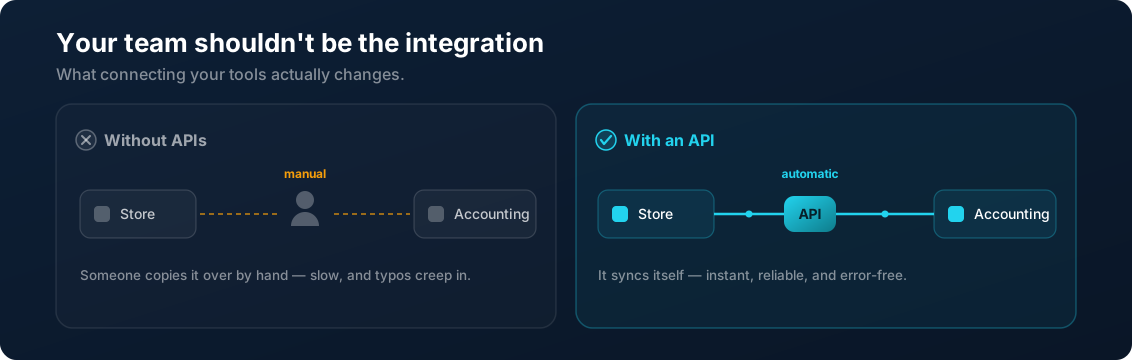
3. Connect the tools you already use. You usually don't need to replace your software — you need to make it work together. A good integration quietly syncs your store, CRM, accounting, email, and calendar so a change in one shows up everywhere, automatically. The copy-paste disappears, the errors drop, and your team gets their time back for actual work.
4. Build an API so others can plug into you. Integration goes both ways. When you expose your own well-built API, your partners, customers, and your own apps can connect to your systems reliably — powering a mobile app, a customer portal, or a partnership that would otherwise be impossible. Your data stops being locked in one tool and becomes something you can build on.
5. Do it right, or don't do it. An integration that breaks silently is worse than none at all, because you'll trust bad data. Done properly, APIs are secure, handle errors gracefully, limit who can access what, are documented so they can be maintained, and are versioned so an update doesn't break everything downstream. The difference between a fragile script and a real integration is everything.
Your tools shouldn't need a human to pass notes between them. Connect them with solid APIs and the manual work, the errors, and the delays quietly disappear — while your data finally becomes one reliable source you can build on. If you'd like us to connect the tools you already use, or build an API others can plug into, that's exactly what we do at Marknesty Tech.
Ready to grow your brand?
Let's talk about your goals and how we can help.